Posts

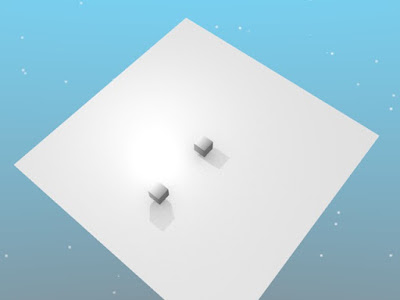
Shelf-Shadow Illusion: 3rd Award of the 5th Illusion Contest in Japan

Image
Upward shadows look darker than downward shadows. * Third award of  the 5th Illusion Contest in Japan . *  Shelf-Shadow Illusion in Visome! Citation; DOI:  https://doi.org/10.6084/m9.figshare.6137558.v1 Eiji Watanabe, Shelf-Shadow Illusion, 2013 Shelf-Shadow Illusion, CG version Shelf-Shadow Illusion, okazaemon version Shelf-Shadow Illusion

Biological motion stimuli are attractive to medaka fish

Image
In many social fish species, visual cues play an important role in inducing shoaling behavior. The present study is the first to examine whether and how "biological motion" depicting a moving creature by means of only a small number of isolated points induces shoaling behaviour in fish. Medaka (Oryzias latipes ) were used because they are known to have high visual acuity and exhibit a strong tendency to form shoals. In experiment 1, we found that the presentation of medaka biological motion resulted in heightened shoaling behaviour when compared with that of non-biological motion (depicted by a small number of points placed at fixed distances that moved at a constant speed in a constant direction). In experiment 2, it was indicated that medaka biological motion was more effective at inducing shoaling behaviour when compared with human biological motion. In experiment 3, it was demonstrated that shoaling behaviour was largely dependent on the smoothness of the biological mo...

Frohlich effect: 3D animation

Image
3D animation of Frohlich effect has been uploaded. http://youtu.be/1vAw8nsCw4w & one more. "the Representational Momentum" http://youtu.be/9eeOfqS1oCI

Visual motion with pink noise induces predation behaviour

Image
Visual motion cues are one of the most important factors for eliciting animal behaviour, including predator-prey interactions in aquatic environments. To understand the elements of motion that cause such selective predation behaviour, we used a virtual plankton system where the predation behaviour in response to computer-generated prey was analysed. First, we performed motion analysis of zooplankton ( Daphnia magna ) to extract mathematical functions for biologically relevant motions of prey. Next, virtual prey models were programmed on a computer and presented to medaka ( Oryzias latipes ), which served as predatory fish. Medaka exhibited predation behaviour against several characteristic virtual plankton movements, particularly against a swimming pattern that could be characterised as pink noise motion. Analysing prey-predator interactions via pink noise motion will be an interesting research field in the future. Matsunaga, W. & Watanabe, E. Visual motion with pink noise ...

Flash-drag Effect: Optical Illusion 3D

Image
We have uploaded "Flash-drag Effect: Optical Illusion 3D". The video is available in YouTube (click URL described in the next line). http://youtu.be/H6XOIN4jaDQ Further, a demonstration animation of depth perception has been uploaded. The video is also available in YouTube. http://youtu.be/RdNbBsoQj_I & one more optical illusion (Geared flash-lag effect, 01/06/2012). http://youtu.be/X8RiaNUFIaU

Flash-lag Effect: Visual Illusion 3D

Image
We have generated Flash-lag Effect in 3D space with Blender software. The video is available in YouTube. http://youtu.be/DUBM-GG0gAk

Off-the-mark illusion

Image
The lady appears to aim her arrow at the space above the star, but she is actually shooting the star. Four variations illustrated by Ms. Nao Tomita, NIBB. Click the illustrations will enlarge images. Refer to following URL (Akiyoshi's illusion pages)! http://www.psy.ritsumei.ac.jp/~akitaoka/friends9e.html

Motion signals deflect relative positions of moving objects

Image
[Motion signals deflect relative positions of moving objects] The perceived relative position of a moving object is frequently shifted as compared to the relative position of the object in the real world.  The illusions have traditionally been explained by temporal models that influence the perceptual latency of visual objects.  However, another compelling theory has recently been proposed on the basis of spatial models that directly influence the coded location of visual objects.  In this study, spatial models were further supported by three different types of illusions composed of apparent motions, in which the perceived relative positions of stationary but apparently moving objects were shifted.  One of three illusions was developed as a novel type of illusion in this paper ( kebab illusion ).  The relative position shift of a stationary object suggested that spatial models play important roles on assignment of position of moving object as well as temporal m...

Watanabe Illusion 2010 (Sight Line Illusion)

Image
Which point do the eyes look at? The third point from the top? The 4th one? When the sight line is defined as a line connecting the centers of white eye and black eye,  the eyes look at the top point (see below). This optical illusion can be simplified as below. See Akiyoshi's illusion page! http://www.psy.ritsumei.ac.jp/~akitaoka/friends8e.html Citation: Watanabe illusion 2010, Eiji Watanabe (2010)  https://doi.org/10.6084/m9.figshare.5838606

Delta Model (Prediction Theory of Visual Illusion)

Image
Delta Model Delta Model Two types of signals (top-down and bottom-up) are assumed in this model.  Top-down signals are hypothesized to be derived from a higher level of the visual system and represent the predictive visual information.  Bottom-up signals are hypothesized to be derived from a lower level of the visual system and represent the original sensory information.  Subtraction occurs between the two signals; the resultant prediction error (delta) is input to a higher level of the visual system that operates the top-down signal to minimize the prediction error. Motion Aftereffect  can also be well explained by the subtraction algorithm in Delta Model, because the subtraction can induce the inverted motion direction observed in Motion Aftereffect. The same logic can be applied to various kinds of Aftereffect illusions. Please refer to the following paper for detail. Watanabe, E., Matsunaga, W., and Kitaoka, A., Motion signals defle...

Kebab Illusion

Image
 A Variation of Kebab Illusion Here, I show you new illusion, Kebab Illusion.  This illusion is a GIF animation which is composed of three frames. Time-line of Kebab Illusion You will percieve the illusory motion in the line.  At the same time, the pre-cue presented at the Frame 1 may shift in the direction of the motion. A Variation of Kebab Illusion Real and Percieved Plesase refer to the following paper and Prof Kitaoka's Web Page for detail. Watanabe, E., Matsunaga, W., and Kitaoka, A., Motion signals deflect relative positions of moving objects, Vision Research 50, 2381-2390 (2010) https://www.researchgate.net/publication/46578016_Motion_signals_deflect_relative_positions_of_moving_objects Prof Kitaoka's Web page http://www.psy.ritsumei.ac.jp/~akitaoka/movie7e.html

Habituation of medaka (Oryzias latipes) demonstrated by open-field testing

Image
What do they see? Habituation to novel environments is frequently studied to analyze cognitive phenotypes in animals, and an open-field test is generally conducted to investigate the changes that occur in animals during habituation.  The test has not been used in behavioral studies of medaka (Oryzias latipes), which is recently being used in behavioral research.  Therefore, we examined the open-field behavior of medaka on the basis of temporal changes in 2 conventional indexes of locomotion and position.  The findings of our study clearly showed that medaka changed its behavior through multiple temporal phases as it became more familiar with new surroundings; this finding is consistent with those of other ethological studies in animals.  During repeated open-field testing on 2 consecutive days, we observed that horizontal locomotion on the second day was less than that on the first day, which suggested that habituation is retained in fish for days.  This tempora...

Member

Image
* Current member Eiji Watanabe (Associate Professor) Nozomi Nishiumi (Research fellow) Taisuke Kobayashi (Research fellow) * Past member Masaki Yasugi (Research fellow) Sachiko Aono (Visiting Scientist) Tomohiro Nakayasu (Research fellow) Wataru Matsunaga (Research fellow) Misuzu Yamada (Research fellow)

Papers

Image
Refer to: ORCID https://orcid.org/0000-0001-9089-8122 or Google Scholar https://scholar.google.com/citations?user=K3d01L4AAAAJ&hl=en

Contact Information

Image
Eiji Watanabe, PhD National Institute for Basic Biology 5-1 Higashiyama, Myodaiji-cho Okazaki, Aichi 444-8787, Japan E-mail: eij "AT" gmail.com (replace “AT” to @)